From the outside, climbing can look pretty simple. You grab the wall, pull yourself upward, and try not to fall. You're not wrong if you think that, but it misses almost everything that makes climbing interesting.
Climbing is part workout, part puzzle, and part mental battle. It requires strength, but not in the way people expect. It forces you to stay calm while you’re uncomfortable, solve problems while physically tired, and repeatedly attempt moves that may not work the first five times.
It also gives you a very direct relationship with fear. Sometimes that fear is rational. You are, after all, hanging off a wall.
Other times, you're well protected, but your brain hasn’t accepted that information yet. You are harnessed in, or over a thick mat.
That combination is a big part of why I keep coming back to it.
🧠 Climbing Is a Physical Puzzle
One of the first things I learned about climbing is that simply trying harder usually isn’t the answer.
When I can’t complete a move, the problem may be:
- my feet are in the wrong position
- my hips are too far away from the wall
- I’m using too much strength and tiring myself out
- I’m approaching the route in the wrong sequence
A route is essentially a puzzle that has to be solved with your body. The holds tell you where you can go, but they don’t always tell you how to get there.
Sometimes the solution is obvious. Other times, I can stare at the same section, attempt it repeatedly, and still have no idea why the move isn’t working.
Then I change one small thing: rotate my hip, move a foot, shift my weight. Suddenly the route feels easy.
That’s one of the most satisfying parts of climbing.
The wall didn’t change, my approach did.
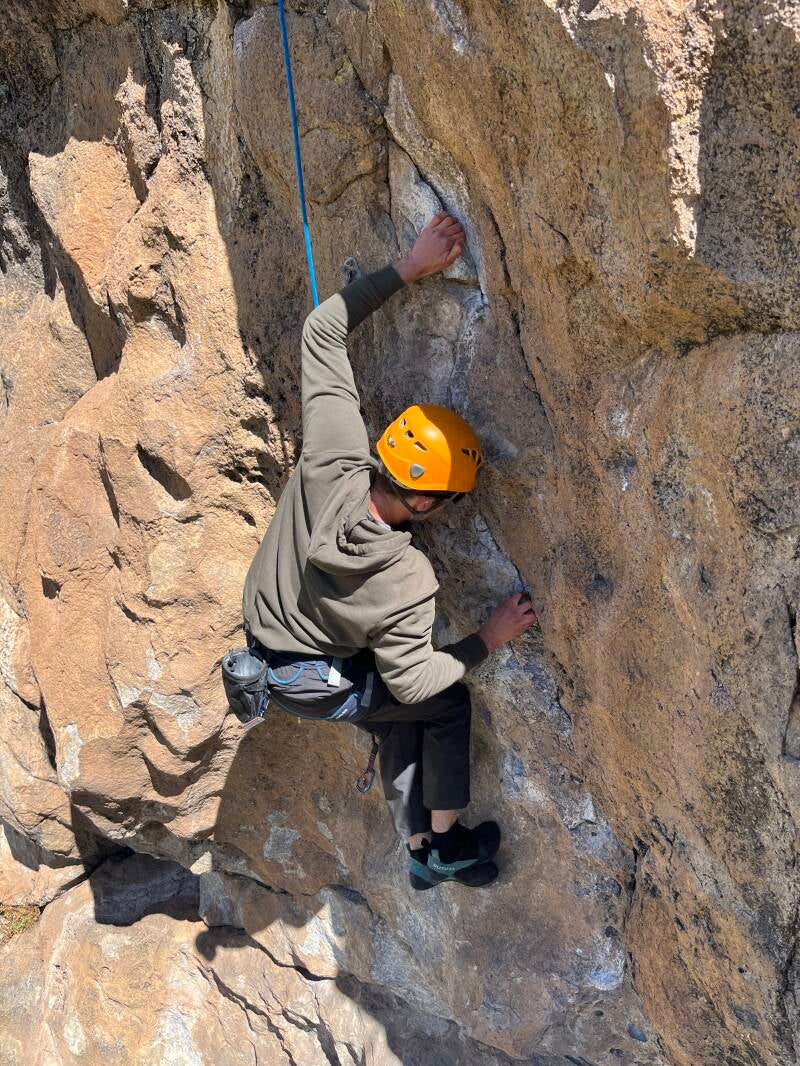
💪 It Requires a Different Kind of Strength
Before people try climbing, they often assume it mostly comes down to upper-body strength.
Being strong certainly helps.
But climbing strength is much more specific than being able to do a bunch of pushups or lift heavy weights.
It requires:
- grip strength
- core tension
- balance
- body awareness
- flexibility
- endurance
- footwork
- the ability to stay controlled in awkward positions
Good climbers often make difficult routes look almost effortless. They aren’t necessarily pulling harder. They’re wasting less energy. They know how to use their legs, position their hips, and move efficiently instead of trying to overpower every hold.
This can be humbling.
Someone who is smaller or less traditionally strong may climb a route easily while a much bigger and stronger person struggles because they are trying to muscle their way through it.
Climbing has a very direct way of reminding me that strength is not only about force.
Sometimes strength is control.
😨 The Fear Is Real, Even When You’re Safe
Climbing also forces you to deal with fear in a very immediate way.
Even when I know:
- the rope is secure
- the equipment is designed to hold me
- my partner is paying attention
- the fall is controlled
…my brain may still react as if I am in serious danger.
That fear becomes especially noticeable when I’m tired, exposed above ground, attempting a move where I feel unstable, or looking at holds I’m not sure I can use.
Logically, I may know that I’m safe. Emotionally, my brain is telling me to get down immediately.
That tension is one of the most useful parts of climbing.
I’m not trying to eliminate the fear. I’m learning how to evaluate it.
Sometimes the fear is giving me useful information. Maybe I am in a bad position, my technique is falling apart, or I need to slow down.
Other times, the fear is simply reacting to height and uncertainty.
The challenge is learning the difference. Experience has helped me distinguish between useful caution and the automatic fear that comes with height and uncertainty.
🪢 Learning to Trust the System
Part of overcoming that fear is learning to trust yourself, the equipment, and the people around you.
Learning to Fall on Lead
Learning to lead climb forced me to test that trust more directly.
When top-roping, the rope is generally secured above me. When lead climbing, I clip the rope as I climb which makes me feel much more exposed.
Part of learning was intentionally taking controlled falls. Even when I knew the system would catch me, letting go felt unnatural. I enjoy the thrill and adrenaline that comes with many activities, but I would still hesitate before releasing the wall. My brain understood what was going to happen, while my hands continued holding on. Eventually, after enough controlled falls and enough time on the wall, the system started to feel real rather than theoretical.
I’ve learned to trust:
- the rope
- the harness
- the anchors
- my belayer
- my own ability to respond calmly
That trust does not mean ignoring risk. It means understanding the system well enough to recognize when something is genuinely unsafe and when my brain is simply reacting to height and uncertainty.
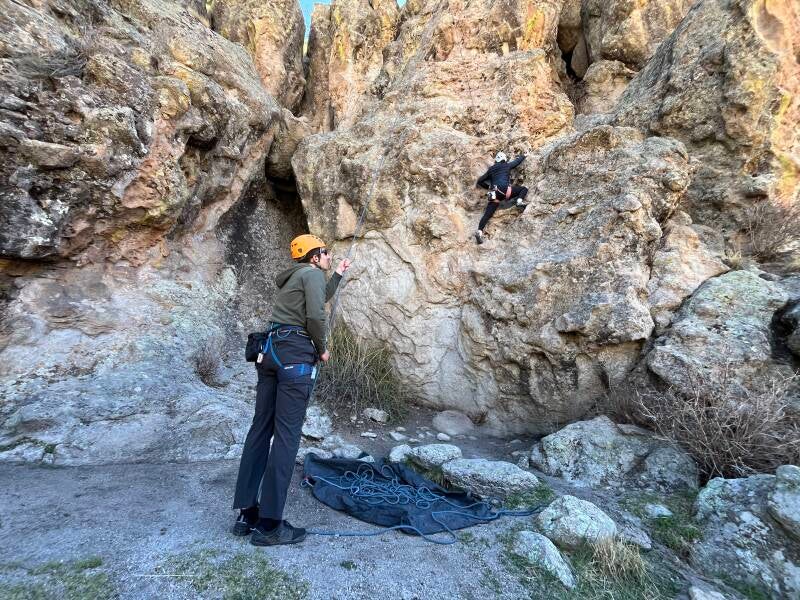
🔄 Failing Is Built Into the Activity
Climbing makes failure unavoidable.
- You will fall
- You will miss holds
- You will struggle on routes that other people seem to complete easily
I may spend an entire session working on one move and leave without finishing it.
That can be frustrating, especially if I feel like I should be able to do something.
But failure in climbing is unusually clear.
The move either worked or it didn’t.
If it didn’t, I can:
- try a different position
- watch how someone else approaches it
- rest and recover
- build more strength
- come back another day
There’s no need to invent a complicated explanation, an excuse, or worry about it too much.
I just haven't accomplish the move yet.
That last word matters.
Many routes that once seemed impossible eventually become manageable after enough attempts, practice, and improvement.
Climbing reminds me that progress is often difficult to notice while it is happening. I may struggle at the same level for weeks, then suddenly find that several routes which once felt impossible have become manageable.
🏔️ Indoor and Outdoor Climbing Feel Very Different
Indoor climbing is controlled and convenient.
The routes are clearly marked, the holds are designed to be used, and the environment is predictable.
That makes it an excellent place to learn and improve.
Outdoor climbing feels different.
The holds aren’t labeled. The route may not be obvious, but the possible holds are endless.
The surface is uneven, the exposure feels more real, and the entire experience requires more planning and awareness.
You also have to deal with:
- weather
- equipment
- route finding
- hiking to the climbing area
- setting up safely
- knowing when conditions aren’t right
That added complexity can make outdoor climbing more intimidating, but it also makes the experience much more rewarding.
You aren’t only completing a route.
You’re spending time outside, solving a natural problem, trusting your equipment, and doing something that requires your full attention.
That’s hard to replicate in normal daily life.
🧠 Climbing Forces Me to Be Present
This may be the biggest reason climbing fits so well into the theme of breaking up the daily grind.
While I’m climbing, I’m not thinking about:
- work
- errands
- my phone
- whatever else I was worried about earlier
I’m thinking about the next hold.
Where should my foot go?
Can I reach that position?
Do I have enough energy to make the move?
Climbing demands enough attention that the rest of life temporarily disappears.
That kind of focus is increasingly rare.
A lot of hobbies are technically breaks from work, but still leave plenty of mental room to think about work.
Climbing doesn’t.
If I stop paying attention, the wall provides immediate feedback.
🤝 It Can Also Be Surprisingly Social
Climbing can look like an individual sport, but much of the experience is social.
You climb one at a time, but you often spend the session:
- watching other people
- discussing routes
- sharing ideas
- encouraging someone through a difficult move
- trusting another person with your safety
- making new friends
People regularly help each other solve routes, even when they’ve never met before.
A simple conversation about one hold can turn into an entire climbing session together.
Outdoor climbing adds another layer because the day requires more cooperation.
Someone has to manage the rope, check equipment, communicate clearly, and make sure everyone gets home safely.
That shared responsibility creates a different kind of connection than simply exercising beside someone at a normal gym.
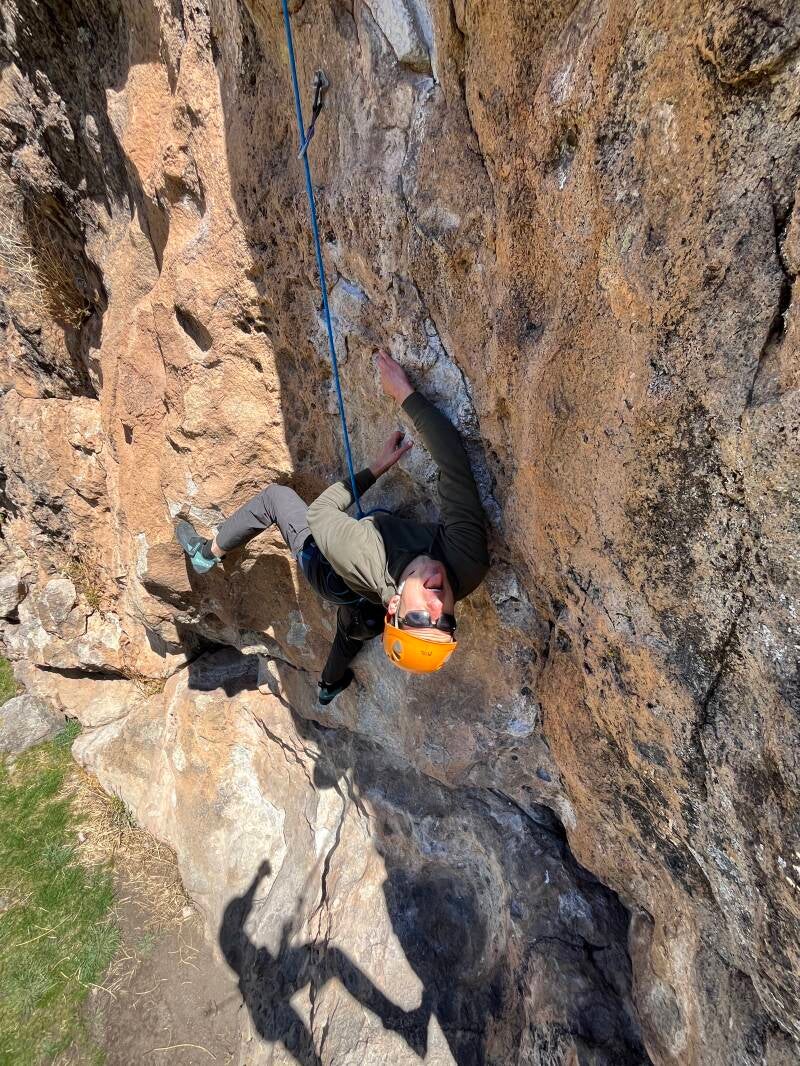
🧭 What Climbing Has Taught Me
Climbing has taught me that physical strength is more complicated than I once thought.
It’s not only:
- lifting more
- pulling harder
- or pushing through everything
It’s also:
- moving efficiently
- staying calm
- solving the right problem
- knowing when to commit
- knowing when to step back
It has also changed how I think about fear.
Fear doesn’t always mean stop. Sometimes it means:
- slow down
- pay attention
- check the system
- and then keep going
Most importantly, climbing gives me another activity that makes life feel bigger than work and routine.
I may spend the day dealing with normal responsibilities, then find myself hanging from a wall that evening, trying to figure out how to move my body six inches higher. It’s difficult to feel stuck in the daily grind when your immediate problem is figuring out how not to fall off a rock.
🎯 Who Should Try Climbing?
Climbing is worth trying if you enjoy:
- physical challenges
- problem-solving
- gradual skill development
- social hobbies
- activities that require your full attention
You do not need to be exceptionally strong. You do not need to be fearless.
You do not need to begin outdoors.
A beginner climbing gym session is enough to see whether the combination of movement, challenge, and problem-solving appeals to you. You may discover muscles you didn’t know existed.
You may also discover that those muscles are angry with you the next morning.
That’s part of the experience, but they get less angry as you keep climbing.
🧭 Final Thoughts
Climbing is more than a workout. It combines:
- strength
- technique
- fear
- trust
- failure
- problem-solving
Every route gives you a clear challenge.
Sometimes you complete it, sometimes you don’t.
Either way, you learn something about how you move, how you react when you’re uncomfortable, and what happens when you keep trying after the obvious solution fails.
That is what makes climbing so rewarding for me.
It gives me a difficult problem, requires my full attention, and makes normal life feel a little less repetitive.
And sometimes, after enough failed attempts, I finally reach the top. That helps too.
Add comment
Comments