There’s a moment before a fight starts where your mind tries to convince you not to do it.
It’s strange because, logically, you already decided.
- You trained.
- You prepared.
- You showed up.
But right before it starts, another part of your brain starts looking for a way out.
I’ve felt this in a few different moments:
- sitting before my first scuba dive
- standing at the base of a climb
But fighting is the clearest version of it.
It’s not dramatic. It’s usually quiet.
👉 a second thought
👉 a hesitation
👉 a simple question:
“Do I really want to do this?”
🧠 How I Ended Up Here
As of this writing, I started training combat sports almost seven years ago.
There were a few long breaks mixed in:
- moving to new places
- struggling to find new gyms
- extended travel
But despite that, I’ve trained relatively consistently and tried to be a serious student of the sport.
At this point, fighting has become a meaningful part of my life and a big part of how I understand myself.
I’ve competed five times so far, and I still hope to do at least a few more fights while I’m physically able to and still passionate about it.

🏋️ What Fighting Actually Consists Of
Most people only think about the fight itself. But fighting is really made up of three different layers.
Drilling / Training
This is the repetitive part:
- learning technique
- practicing movement
- building habits
- developing strategy
Most of my time in combat sports is spent here.
Sparring
This is where things become more realistic. Sparring lets you:
- test techniques
- manage pressure
- learn timing
- get comfortable in uncomfortable situations
There’s still control and safety involved, but it’s much closer to reality.
Competition
Then there’s the fight itself. This is where:
- adrenaline changes everything
- unpredictability becomes real
- and all the preparation gets compressed into a few minutes
Training and fighting feel emotionally very different.
⚠️ The Mental Battle
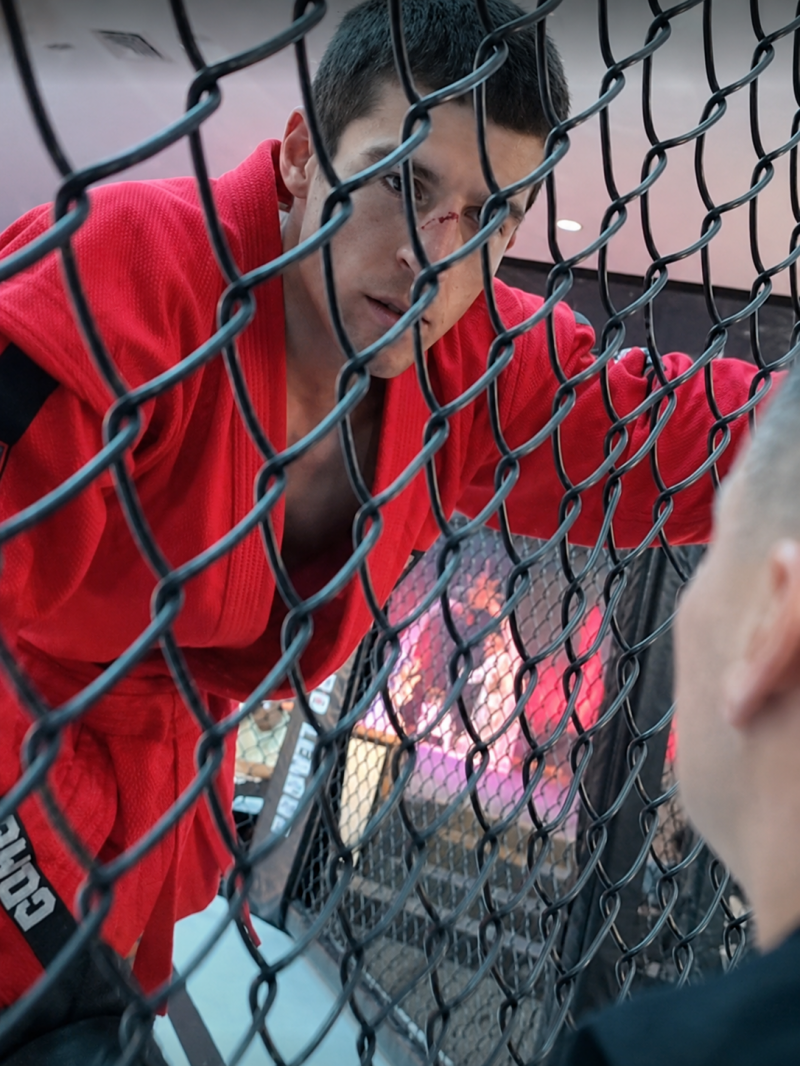
The hardest part of fighting usually isn’t physical. It’s mental.
Before the fight
Before each fight, I would often be completely calm:
- supporting teammates
- warming up
- waiting for my name to be called
Then suddenly, a wave would hit me, and almost immediately, my mind would start imagining worst-case scenarios.
I’d suddenly become nervous, and even a bit scared.
During the fight
This same wave would hit me during the fight as well.
After:
- getting hit hard
- getting taken down
- ending up in a bad position
- or just getting tired
…my mind would immediately start looking for an excuse, and then an exit.
These would be subtle thoughts:
- “I’m exhausted”
- “Maybe today just isn’t my day”
- “I don’t actually have to keep doing this”
Those thoughts happen automatically.
And they become strongest during pauses:
- between rounds
- after difficult exchanges
- whenever there’s enough space to think again
That’s what surprised me most about fighting.
The real battle often wasn’t against my opponent. It was against the part of my own mind that wanted relief.
However, I tell myself the only way out is through, and that feeling of pushing through is priceless.
🌊 The Fight Itself Feels Different Than People Expect
One thing people don’t really understand about fighting is how strange adrenaline feels.
The first time I fought, I was so full of adrenaline that I exploded with energy immediately.
I remember going all out early in the fight, feeling exhausted, and assuming the first round had to be almost over.
I glanced at the clock.
👉 Only 15 seconds had passed.
That moment stuck with me. Since then, I've made sure to not repeat that mistake.
Even with more experience, large parts of a fight can still feel foggy afterward:
- fragmented memory
- hyper-focus
- exhaustion
- tunnel vision
Sometimes afterward, I barely remember entire stretches clearly.
One thing is consistent though:
👉 the anticipation is often worse than the fight itself
Once the fight is happening, there usually isn’t much time left to overthink.
You just react to what’s in front of you.
🔄 The Only Way Is Through
Over time, I realized something important. The fear and hesitation never fully disappear.
Even with experience:
- the nerves still show up
- the discomfort still exists
- the mind still looks for ways out
But with experience, I started recognizing those thoughts for what they were.
I stopped expecting those thoughts to disappear and started understanding that they were normal.
That hesitation isn’t weakness. It’s just my brain trying to protect me from discomfort and danger.
What matters is what happens next.
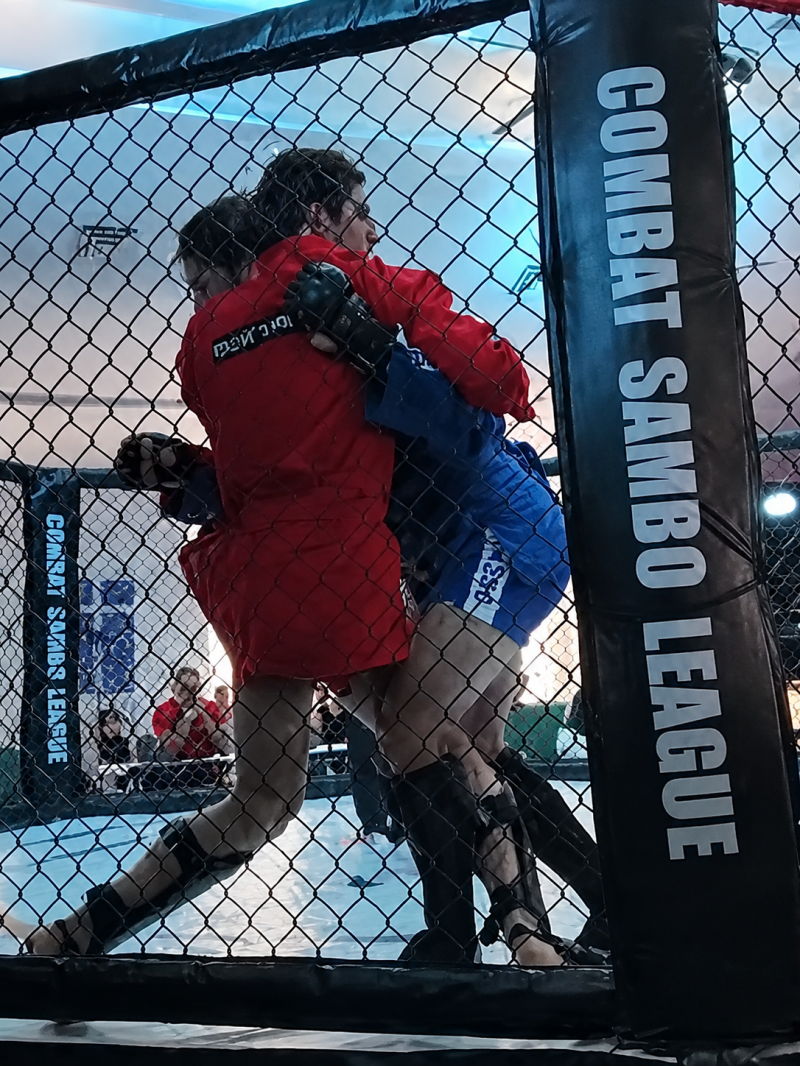
There were moments in fights where backing out would have been easy.
Moments where I felt:
- exhausted
- overwhelmed
- physically uncomfortable
- unsure if I could keep going
And in those moments, I’d tell myself the same thing:
👉 the only way out is through
That phrase sounds simple when people say it casually.
But it means something very different when your body is exhausted, your opponent is landing shot after shot on you, and your mind is actively trying to convince you to stop.
This part is really hard.
I understand why people quit in those moments. The feeling is intense, and it takes experience to learn how to stay there without immediately looking for a way out.
I’ve been fortunate to have some really good coaches who understood this and intentionally put me in difficult situations during training so I could work on it before it happened in a fight.
That’s where fighting changed for me. It didn't make me fearless.
👉 It taught me to recognize fear, keep moving through it, and sometimes even use it.
🤝 What Happens After
When each fight ended, I felt a huge wave of relief, followed by accomplishment and a strange sense of calm. Regardless of the result, I know I pushed myself to do something really challenging and made it through. I also know I gave it my best.
Another really cool part of fighting is congratulating my opponent afterward. Minutes earlier, we were trying to beat each other. Then the fight ends, and there’s usually a real sense of mutual respect.
I can’t know exactly what my opponent was thinking, but I know he had his own nerves, his own doubts, and his own internal battle to get through. That shared experience creates a bond that’s hard to explain.
Once that immediate emotional resolution passes, I always focus on what I need to take away from the fight. I watch the videos of my fights many times, which is always a very humbling experience. Even if the fight went really well for me, I always see so many basic mistakes that shock me. That's part of the game, and it always leaves room for growth.

🧠 What Fighting Changed For Me
Fighting has been an incredible outlet for me.
There have been plenty of personal and fitness-related benefits from the training itself, but the competitive side has given me something different.
It let me prove to myself that I can handle really difficult circumstances.
I can feel comfortable knowing I put myself in potentially dangerous situations, dealt with the pressure, and made it through.
It also taught me:
- how to stay calm under pressure
- how to stay focused when adrenaline is high
- how to keep going when part of me wants to stop
And lastly, I have some fun personal moments and stories to share.
Sometimes, I even get to feel like a badass.

🧭 Final Thoughts
Fighting is one of the clearest examples of the internal battle people experience in many areas of life.
Not everyone should fight, but everyone has their version of these moments.
Life knocks us down in different ways. Sometimes it happens at work. Sometimes it happens in relationships. Sometimes it happens when we’re forced into situations we didn’t choose.
That’s part of why I think challenging hobbies matter.
They let us practice discomfort in a controlled way.
And when real life gets difficult, that practice starts to matter.
Add comment
Comments